
Update on the Work: Whew!

Sat down at 8:30 a.m.  It’s now 5:19. My eyes are tired. Wondering why my back isn’t.

(Blog break for Tylenol fix, just in case.)

Three new scenes. Maybe they will end on the cutting room floor, but two of them have been in my head since the beginning. So there.

That’s it. I’m calling up my Beta-Readers. (Shout out to Roz Morris for the term. No, I haven’t employed you but I’ve devoured your Nail Your Novel series.)

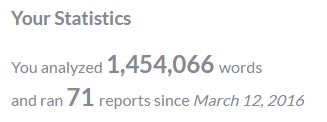
Nine hours ago, here’s what my Autocrit dashboard looked like:

Capture

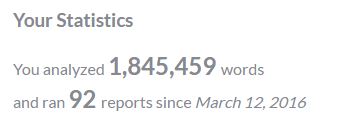
And, twenty minutes ago, this is the update:

stats

(That doesn’t count the separate Grammarly runs.)

No, my momma never said there’d be days like this.

But, I’ve had them and I love them!

Now, on to the vino.

Thanks, Kareem

Before the terrifying prospects now available to humanity, we see even more clearly that peace is the only goal worth struggling for. This is no longer a prayer but a demand to be made by all peoples to their governments – a demand to choose definitively between hell and reason.

–  Albert Camus, as quoted by Kareem Abdul Jabbar

Thought for the Day

“It is perfectly ok to write garbage – as long as you edit brilliantly.”

C.J. Cherryh

Update on the Work: 3d Pass


I’m definitely a self-taught fiction writer. Indeed, I’m still in the process of self-teaching. Any thoughts my readers may have on my process will be more than welcome.

Right now, I’m on my third pass through the manuscript of my first novel. This is what I mean:

  1. Pass One was the initial writing. You can see some of my earlier posts under the category “Art of Writing” to glean how I managed that process. That took about a year.
  2. The second pass was two months of “Anti-Editing,” which I completed about the first of March. I went through the entire manuscript making notes while trying not to spend time actually revising anything. I wasn’t entirely successful at avoiding all revisions, but I was pretty good.
  3. I’m now on the third pass – actual revisions. This is where I’m fleshing out characters and smoothing over (and adding to) plot lines.

Meanwhile, my first “Beta Reader” is at work. She’s also a light copy editor. I’ve got about 50% of the manuscript back from her and am incorporating her thoughts as I go along with this third pass.

I hope to complete the third pass in another month. Then it goes out to more Beta Readers for comment. Detailed editing will follow that.

writing


PHOTO TAKEN FROM HTTP://CENTRUM.ORG/PROGRAMS/WRITING/

Math Problem? What an insult!

Since when did a fundamental right to personal liberty become a math problem? Since Casey (1992), that’s when.

The fundamental flaw of Casey has always been its concession that some people could suffer a 100% denial of a constitutional right so long as those people denied their constitutional right were not a “large fraction” of the people seeking to exercise that right.

Does that work for gun ownership? Of course not. But when it comes to a woman’s right to privately decide issues related to her own medical care, let’s do math!

Now a woman at the blog FiveThirtyEight has laid out the analysis in a way that should make the outrageousness of this approach apparent. Though she doesn’t seem to get it herself; she simply hopes that a Supreme Court opinion in the case heard yesterday (Whole Woman’s Health v. Hellerstedt) will offer a “clearer way to do the math.” Perhaps that’s tongue in cheek? Don’t think so.

Whole Woman’s Health is not a third-grade arithmetic problem. As Justice Ruth Bader Ginsburg said at oral argument, “What it’s about is that a woman has a fundamental right to make this choice for herself.”

Related:

The Women Take Over | Slate

The Supreme Court’s Test For Abortion Laws Is A Poorly Defined Math Problem | FiveThirtyEight

Kennedy Hold the Key in Texas Abortion Case | Scotus Blog, Amy Howe

Supreme Court Hears Arguments Testing Texas Abortion Restrictions | Nina Totenberg, NPR


Update on the Work

I’ve finished four days of rather intensive rewrites on the late-middle chapters of the novel. I needed to correct some timeline issues in the plot. Of course, that led to some major rewrites. I’ve added some good stuff to develop the characters, which led to a whole new chapter.

Good work in process. More to do. #amwriting

John Grisham thinks his new book is so important he’s giving it away for free!

“The Tumor,” Grisham says, is the most important book of his career. It’s not about lawyers, but a new treatment for cancer. That’s interesting, and I’d like to congratulate John Grisham on his new book and his service to this cause.

The reason I post this on my blog, however, is to preserve this quotation from his interview in The Washington Post:

“Writers are thieves,” he said. “We steal stories. We steal names. We steal scenes. We observe the world and we take what we need and modify it.”

Source: John Grisham thinks his new book is so important he’s giving it away for free – The Washington Post

Update: Time to Dream

Perhaps I see the end of the novel in my sights! There is still much to do.

For example, I’ve located a major timeline glitch that needs to be fixed. I’m going to rewrite a handful of chapters to accomplish that. Also, I’ve got to add at least one chapter to fill in a gap in the story that became apparent in my last read. This is all a result of the Anti-Editing process that I’ve been engaged with over the last few weeks.

Meanwhile, I’m allowing myself to look forward to the next steps. I’ve got one committed “Beta-Reader.” I’m about to ask my copy editor what format she’d prefer I use when I turn over the manuscript to her. I want that work done before it goes to Beta-Readers.

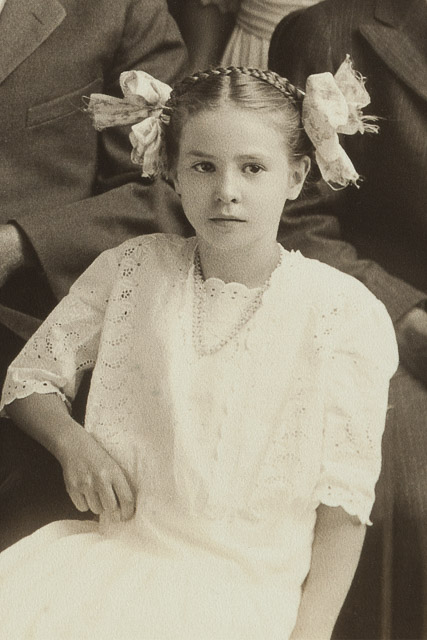
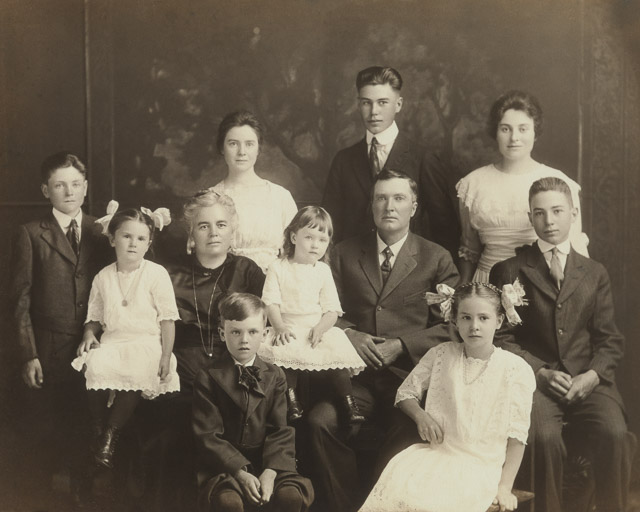
And, most whimsically, I’m dreaming up covers. I know this is where I’m going to need some professional help. But for now, what do you think about these images?

Vivian_web

ESTHER_web

Family_web

Working title:  Never Easy, Never Simple: Stories from My Mother

Anti-Editing

Just found a name for the stage I’m working on: “anti-editing.” It’s fun. Read more from this interesting article here:

http://blog.nanowrimo.org/post/138735624781/now-what-how-to-deepen-your-manuscript-beforeOutlookGraphic_Binoculars

Specifically, what I’m doing is reading the complete draft which I finished on December 19 and making notes on each chapter:

  • time period
  • summary of the action (plot)
  • list of minor characters used in the chapter
  • what might be improved

Next, I’ll work on those improvements.


Research vs. Procrastination

Has this morning’s work been useful, or just a means of procrastination?

Typewriter

I found myself buried in Wikipedia links this morning. I’m trying to develop some characters (one primary, one secondary) who are quite religious. But I’m sure they didn’t have time for a lot of sophisticated religious study. More than, perhaps, the average Methodists of their time, but not close to what one would expect of a seminarian.

So, how much is too much about John Wesley and his brother, Charles? Charles, it turns out, wrote the hymns. He was writing poetry and it happened to become music. Which is very important in the Methodist liturgy.  And, probably not coincidentally, my primary character won a ribbon at the Iowa State Fair for vocal musical performance. Neither Charles nor Wesley foresaw that, I’ll bet.

Do I need to get into Arminianism? Probably not. But perhaps a bit of the distinction between Methodism and Calvinism is in order. I’ve been reading Gilead and feel fairly strongly that there is more than enough there about Calvinism. I don’t want to go that deeply into the Methodist religion. But then, my character is not the pastor as is the narrator in Gilead, so that makes perfect sense.

I started this morning with a desire to find the name of the book Methodists used in the early 20th Century to educate children and new converts. What would be called in the Catholic religion a “catechism;” I think.  I haven’t been entirely successful in rooting that out using my computer. I may have to ask a Methodist historian unless I can find a way to write around it. (Anyone who can help me out by commenting here, please do so.)

Has this morning’s work been useful, or just a means of procrastination? Since I’m on no real deadline, these diversions from my actual re-writing (developmental self-editing) are okay to at least some extent. Aren’t they?  I did make it through one chapter of rewrites. I’d hoped it would be two.